









Everyday life5 min read
Exercising your whippet
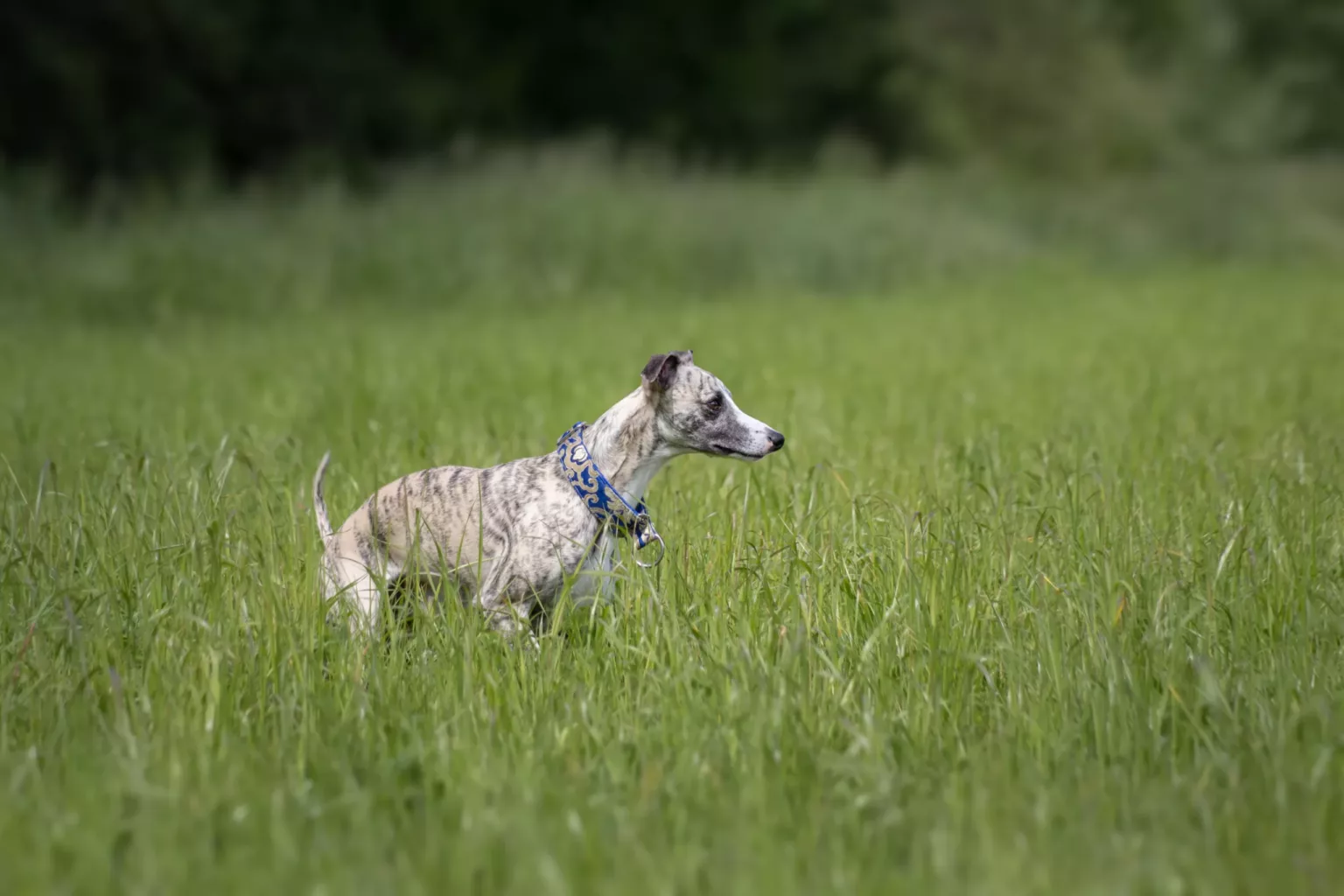
The whippet, like all his fellow sighthounds, is the victim of huge prejudices about his temperament and the exercise he needs each day. So let's look together at how to exercise your whippet.
Physical exercise
Like all dog breeds, the whippet needs to be taken out regularly to stay balanced. Known for their athletic build, whippets are often the subject of clichés. They are portrayed as real live wires that cannot be contained, indoors or outdoors. The truth is quite different.
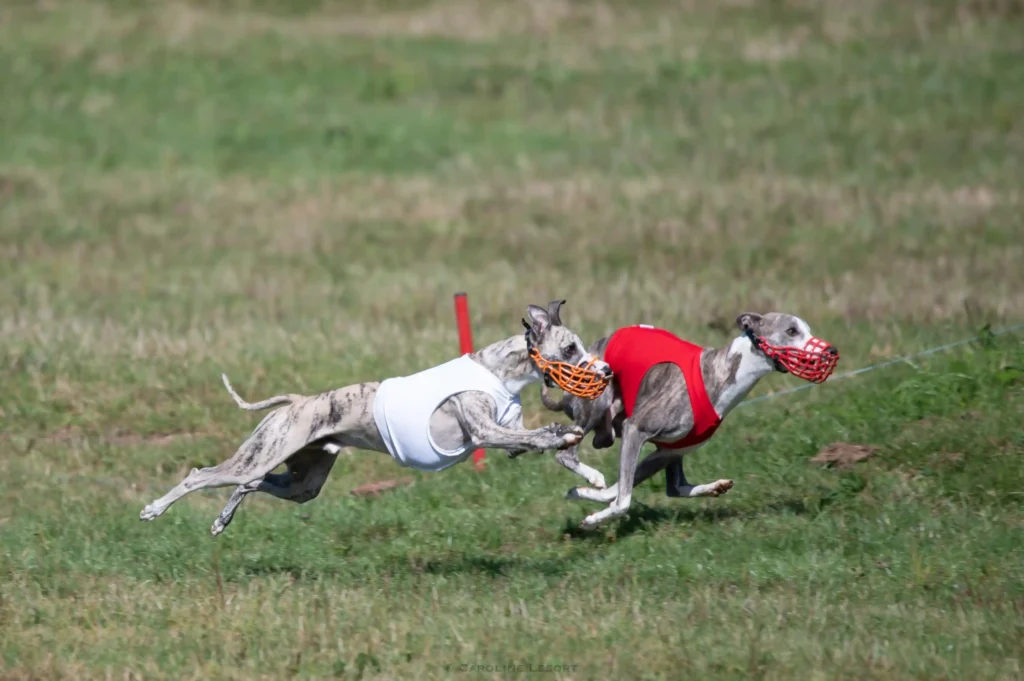
It is indeed necessary to let the whippet's “sprinter” abilities express themselves when he has the opportunity on your outings. In truth, the whippet is not a dog with great stamina. He will not be able to run at full speed for hours, as some suggest.
Born hunters, sighthounds have the ability to run very fast over a long distance in short bursts: generally to chase prey. This is the whole point of the work done in racing and lure coursing (PVL), which brings out a primal instinct in the dogs that take part. This work combines physical and mental exercise, since your whippet will think about the path of the lure and therefore about a strategy to catch it. On the other hand, they can hike over long distances without any problem.
So, as for all dogs, walks and outings in nature are a must, but not necessarily more than for any other breed. You simply need to adapt to your dog's age and physical condition. It should be noted that physical exercise (active exercise: running, ball games, etc.) is the least tiring kind of exercise for a dog. It will be short-lived for him.
Mental exercise
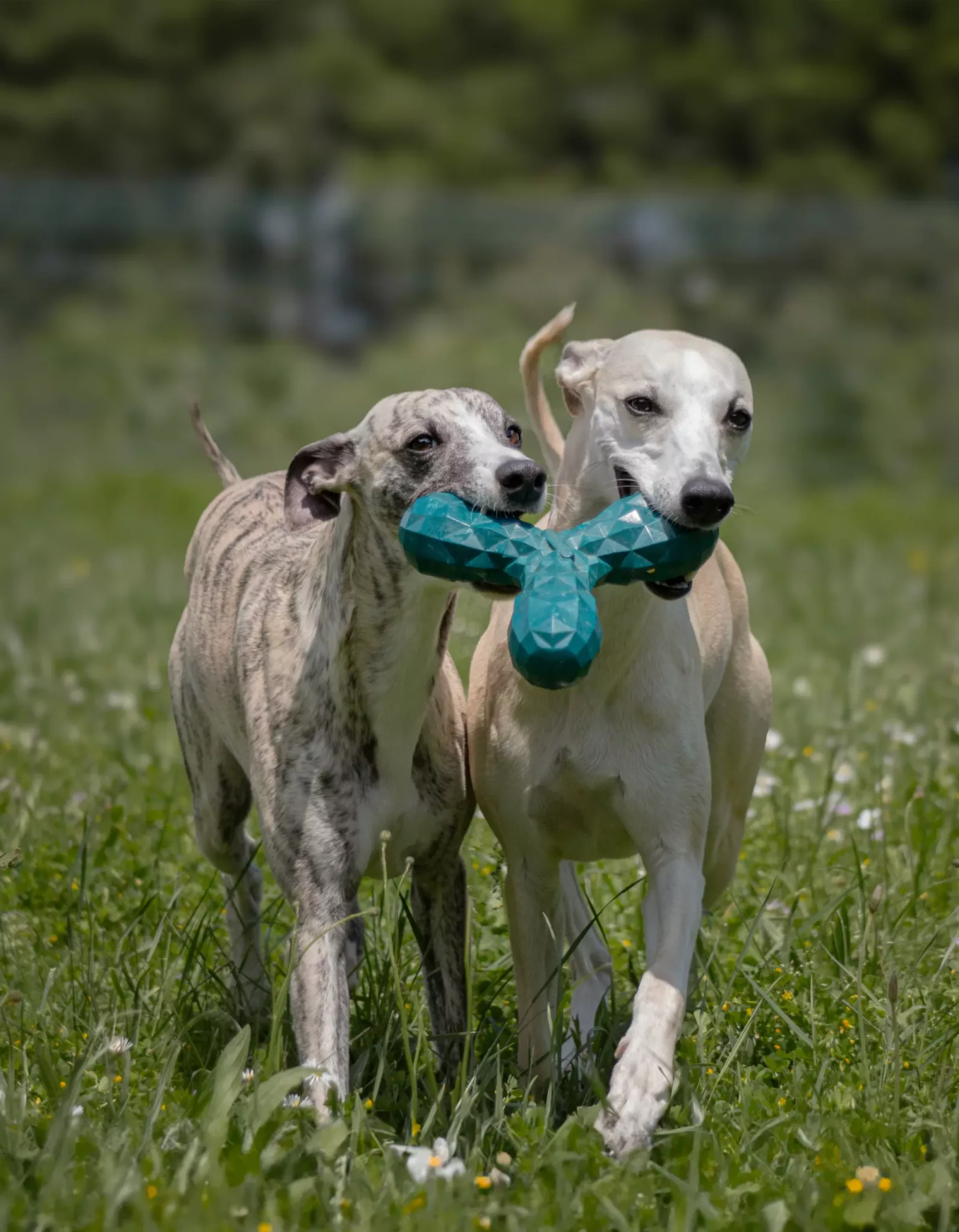
Just like physical exercise, mental exercise is essential for a dog's psychological balance. Indeed, whether it takes place indoors or outdoors, it is the most energy-consuming type of exercise for your whippet and all other dog breeds. Every new discovery (places, smells, encounters, etc.) is stimulating and essential for their psychological balance.
What do we mean by mental exercise?
Mental exercise covers all the intellectual stimulation linked to the dog's natural needs.
Scent stimulation
On walks, discovering unfamiliar smells is one way of exercising your dog. It is essential for a dog to be free to sniff and therefore interact with its environment. Through its sense of smell, the dog gathers the information scattered around it.
That is why letting your dog move about freely (unless necessary) on outings is much more effective in tiring him out than constantly offering to play.
If one day you don't have much time to go out, choose a 30-minute quiet walk over throwing toys (balls, frisbee, etc.).
You can of course vary the activities on your outings. In another vein, working activities for whippets combine physical and mental exercise. Work also responds to a primal instinct in whippets.
Chewing
Chewing should also be an integral part of your whippet's life. Indeed, it offers several benefits:
- Mental exercise, as you might expect. A fairly long chew gives him a calm, occupied time that will certainly help him unwind, since his brain is stimulated. It also helps your dog learn to settle.
- Better dental hygiene! We are not talking here about Dentastix, which, on the one hand, are “bad” for dogs and, on the other, do not help with dental care. Natural chews give your dog the opportunity to clean his teeth, depending on their hardness and how long he chews. We have seen the difference ourselves since we made this a habit in our dogs' lives. We see almost no tartar in their mouths any more. The vet has also remarked on it.
- Something to do in bad weather or in case of injury. This ties in with the first point: when your whippet is injured, weakened or it is pouring with rain outside, chewing is your ally! It lets you tire your dog out indoors without any physical effort on his part. Be careful: it does not replace daily outings if your dog is in great shape. It is a complement.
There are chews for all sizes, all tastes and all ages! Rabbit ears, chicken feet, calf hooves, yak cheese, olive wood and many more: there is bound to be a chew that suits your dog and the time you want him to spend on it. Whether it's a simple chicken foot as a treat or a yak cheese for an hour of chewing, your dog will enjoy the moment and unwind.
What's more, it is a real ally for teething puppies. Their need to chew must be met, just like adults'; your furniture will thank you. Note that a puppy will not be given the same types of chews as an adult: for them, you can choose easier levels such as chicken necks, calf hooves, chicken feet or rabbit ears, for example. It must always be done under supervision.
Zilcis puppies will leave home with a bag of various chews to help you start making this part of your whippet's life.
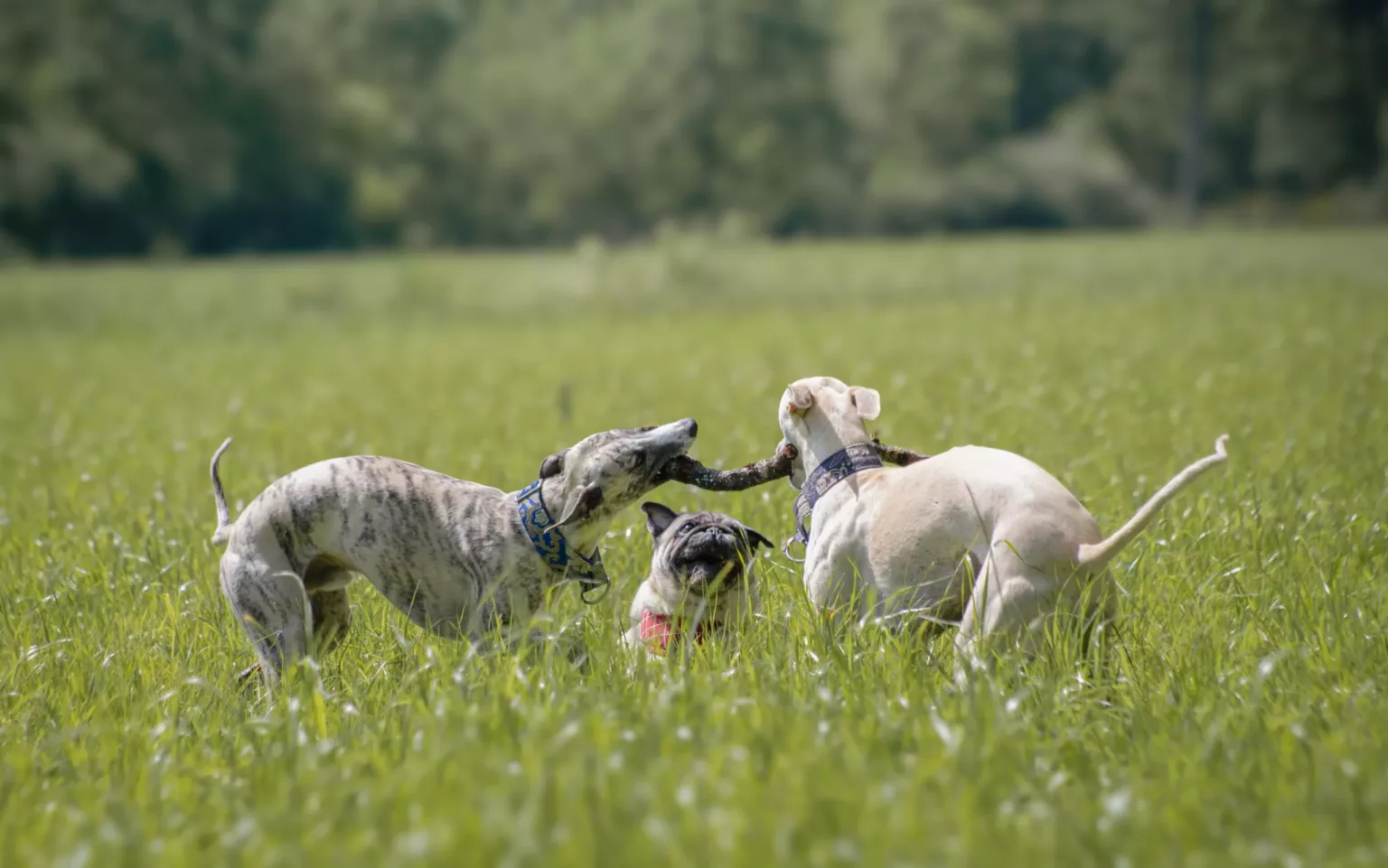
In short, what does it all mean?
In summary, your whippet needs more than simply going out into your garden to be fulfilled. A dog is an animal with natural needs that you have a duty to meet. These needs do not only concern playtime but many other things that we have explained above.
Be careful: a puppy's needs are different from those of an adult whippet. Indeed, a 3-month-old puppy must not be overstimulated with long walks followed by long chews and big play sessions. We would remind you that a puppy spends the vast majority of its time sleeping. Exercise must be gradually adapted to your whippet's needs and age. In any case, we remain available to talk with you and advise you throughout your whippet's life.