


Shows & working4 min read
Dog shows
Zilcis and conformation shows
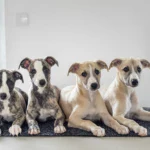
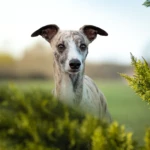
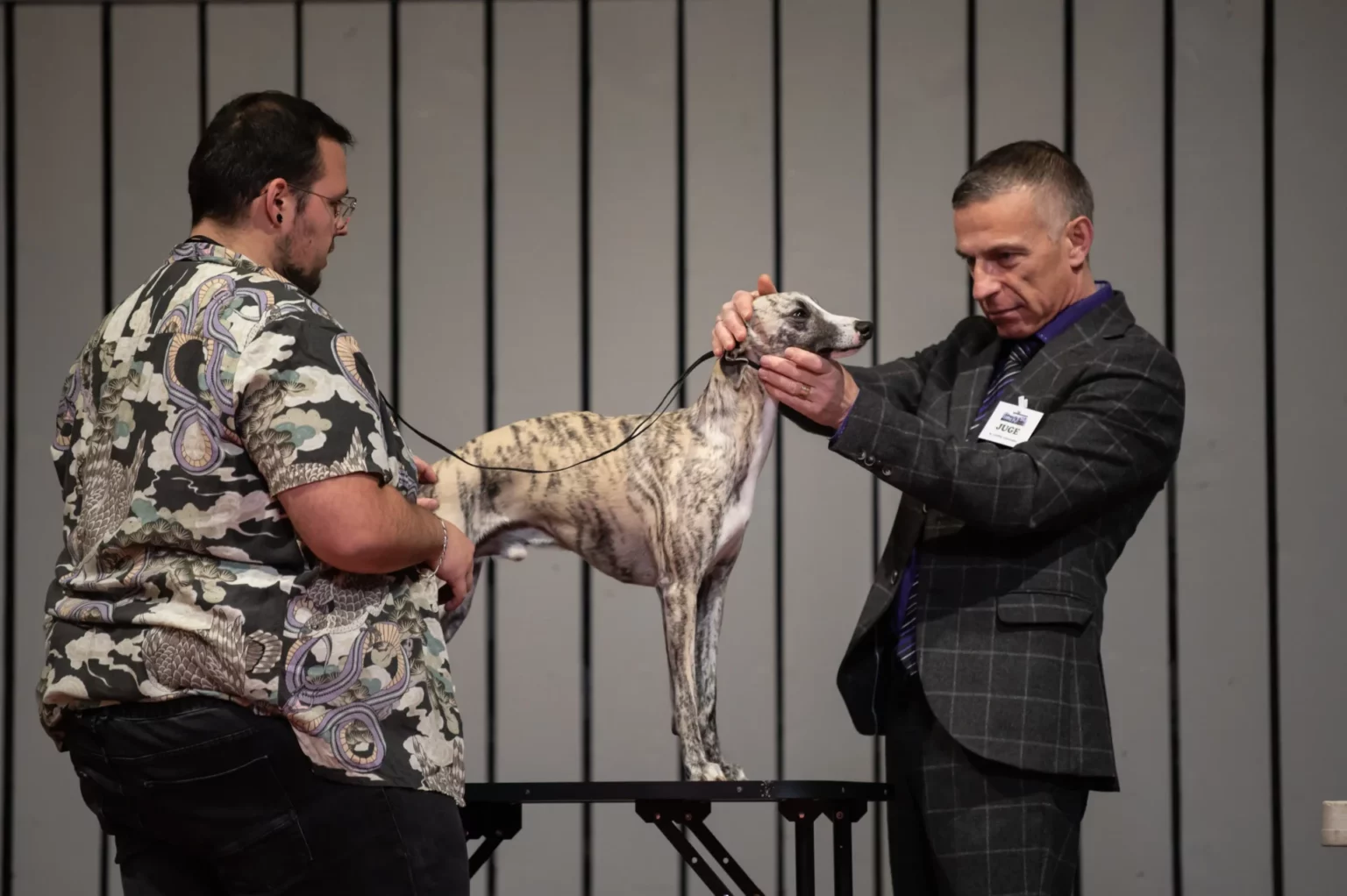
At Zilcis, we are big fans of dog shows. We started showing with Scott in the baby class when he was 4 months old. Since then, a real passion has been born. We learned alongside him and have never stopped since. Freddie, our pug, also joined in, aged 2 at the time. Today, we continue to regularly show our whippets to judges from all over the world. We plan our litters so that our puppies can, just like their parents, go to shows and represent our selection.
However, this does not oblige you to do the same. That said, if you would like to give it a try, we would be delighted to help you learn and to support you!
For the curious, the aim of shows, whether national or international, in France or abroad, is to reward the most physically beautiful dogs with reference to the breed standard. The dogs must be presented in good overall condition on a show lead; you can find the models we use here.
For a successful turn in the ring, you need to master 3 things:
1. The stack
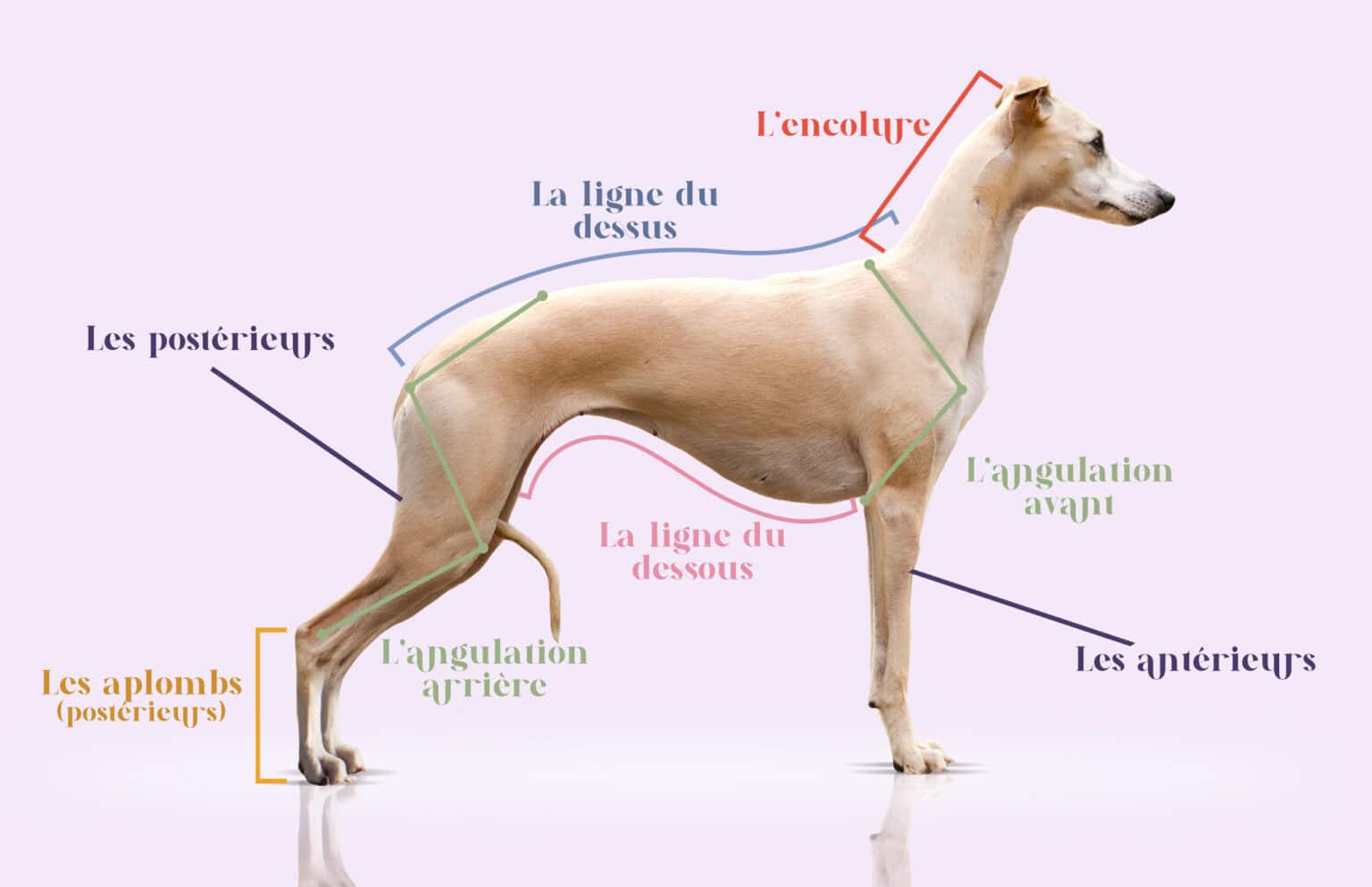
The dog must hold this position. He must also be used to being handled so that his teeth and eyes can be examined, and he can be measured and touched without difficulty and without being afraid. It is the pose in which his qualities are supposed to be shown off to best advantage.
- The forelegs must be straight to bring out the front angulation.
- The hind legs must be positioned so that the legs are perpendicular to the ground, so that the rear angulation can be seen.
- The head must be held up so that the neck stands out well.
- The muzzle must not be in the air; it should be tilted slightly downwards so as not to break the topline.
The topline will be more or less curved depending on the dog presented. So will the underline. The latter is more pronounced in females than in males.
The whippet naturally carries his tail between his legs; it goes there automatically when he is stacked, and it is not a sign of fear or mistrust.
Our puppies will be used to this position from a very young age; “reinforcement” would be needed at home if you wished to continue this activity.
NB
Training your dog to stack is also very beneficial as part of “medical training”. Indeed, getting him used to standing on the ground or on a table and being handled proves very useful at the vet's, for example. Dogs are much more at ease and pleasant to examine for health professionals.
2. The up-and-back (up & down)
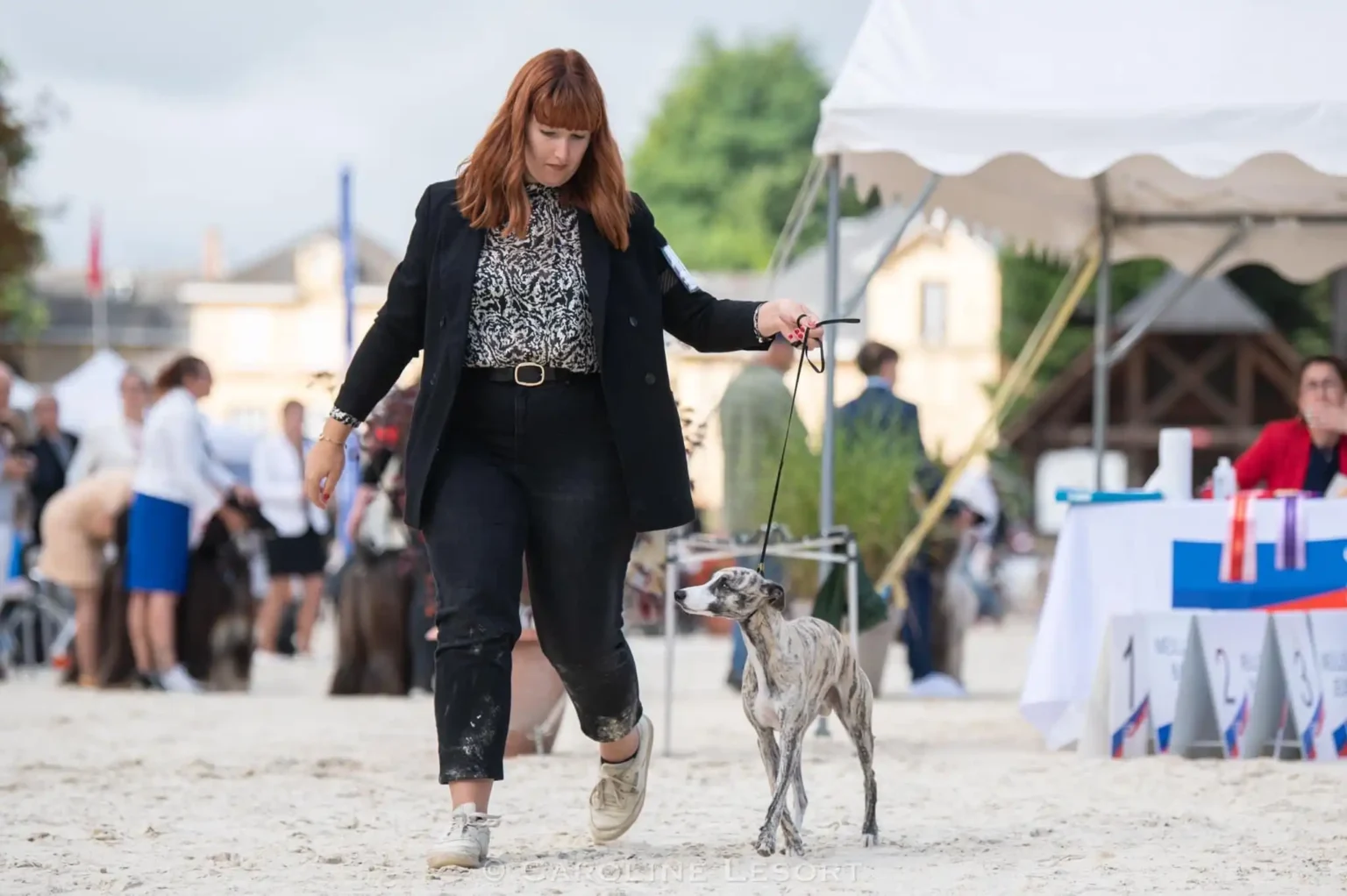
Doing an up-and-back couldn't be simpler. You just need to walk briskly for a few metres facing the judge, going away and then coming back. The dog must walk in the same straight line throughout. It is up to the handler (presenter) to move from one side of the line to the other when changing direction. The up-and-back allows the judge to see the dog's movement from the front and from behind in order to check that it moves parallel.
3. Gait
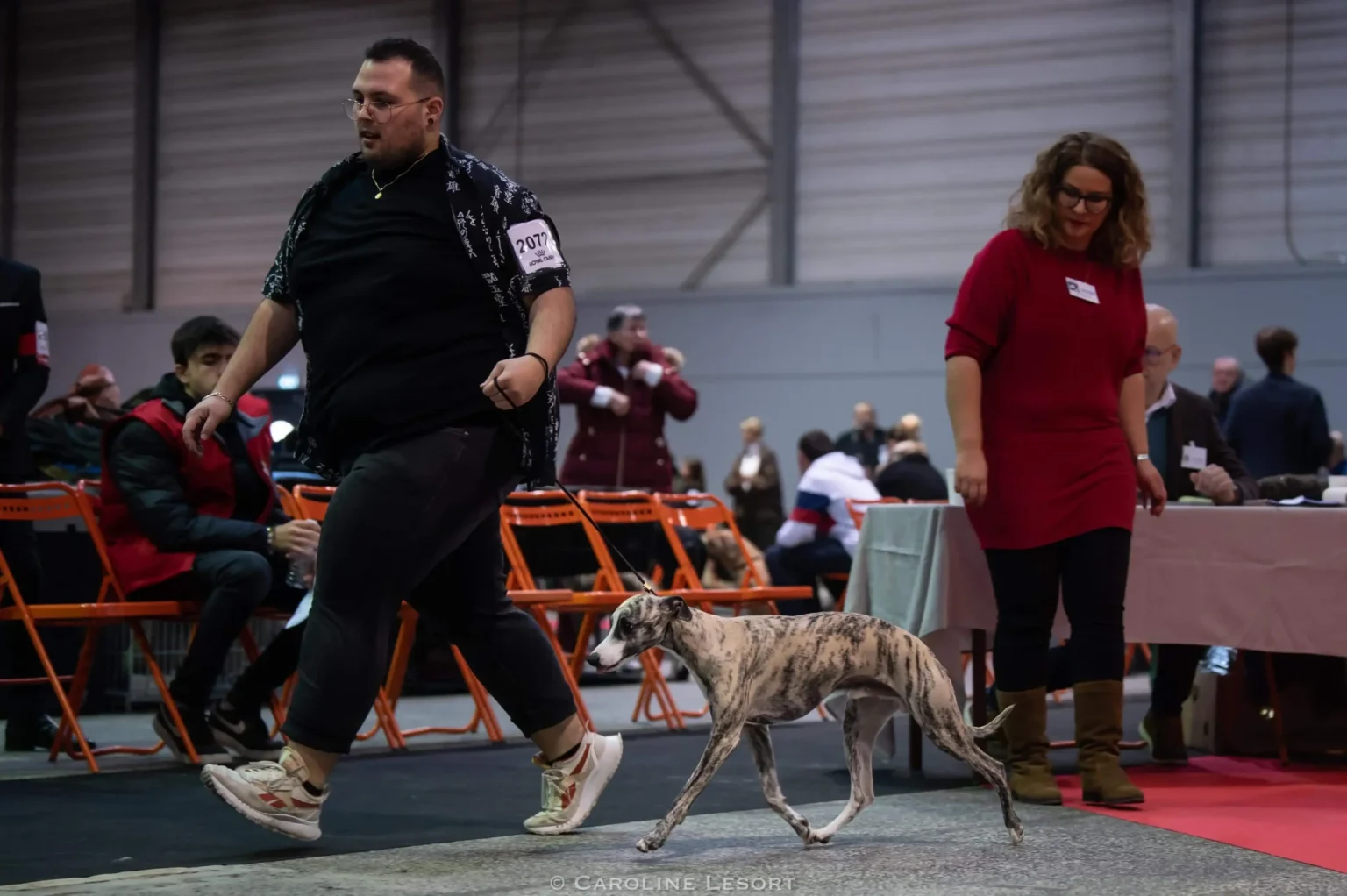
To show a nice gait, your dog must trot. He must neither walk nor run, otherwise his side movement will not be ideal. The legs should move close to the ground, and the dog's back should stay steady and not change shape while moving. To achieve this, you need to adapt your pace to the dog, his age and his size. When your dog is moving, you must be in sync and therefore make the same movement together.
Once all the dogs of the breed have been judged, don't forget to collect your slip: the report giving your grading and the judge's overall assessment. Note that if your slip names you Best Baby, Best Puppy, Best Junior, Best Veteran or Best of Breed, your day is not over. You must go to the main ring, the largest one at the show, which usually has a podium, for a second turn alongside dogs of other breeds.
Entering
The vast majority of French shows are listed on cedia.fr or on sccexpo.fr. On these websites, you can enter these events and follow the show results. To do so, your dog must be LOF-registered.
Over to you! Don't hesitate to get in touch with us if you have any questions!